Greek Mythology Explained: Gods, Heroes and the Stories That Shaped the World
Greek mythology is the most influential body of stories the ancient world produced. Its gods argue, scheme, fall in love and start wars; its heroes battle monsters and their own fatal flaws. Three thousand years after they were first told around Bronze Age fires, these tales still supply the plots of films, the names of planets and the language we use every day. This guide explains how it all fits together.
The Beginning: Chaos, Titans and Olympus
In the beginning there was Chaos, and from it came Gaia (Earth), Tartarus (the abyss) and Eros (desire). Gaia's children, the Titans, ruled the cosmos under Cronus — who, warned that his own child would overthrow him, swallowed each of his children at birth. His wife Rhea hid the youngest, Zeus, and when Zeus grew to manhood he forced Cronus to disgorge his siblings and led them in a ten-year war against the Titans. Victorious, the new gods made their home on Mount Olympus, the highest peak in Greece.
The Twelve Olympians
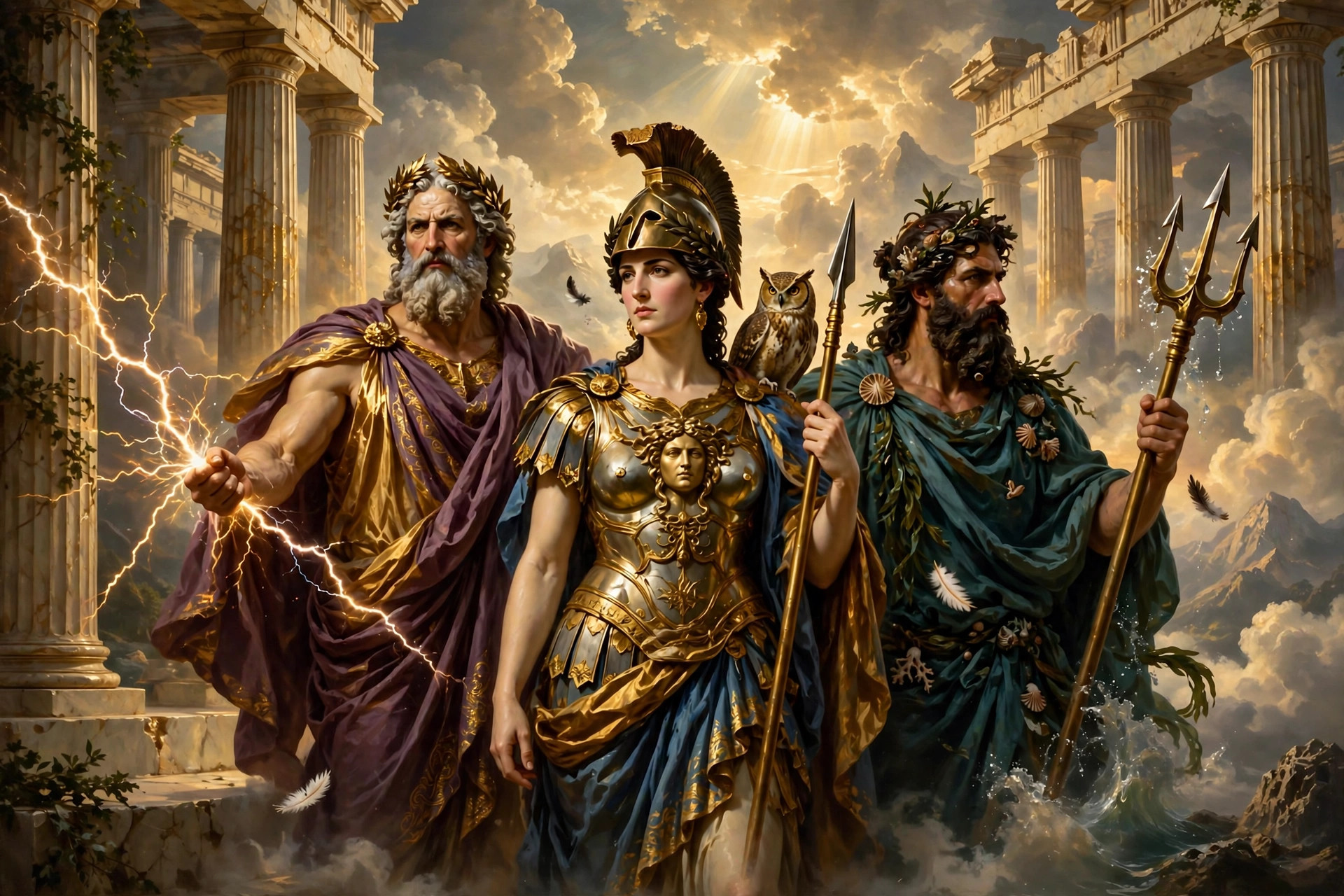
At the heart of Greek mythology stand the twelve gods of Olympus. Zeus, king of the gods, ruled the sky and hurled thunderbolts at liars and oath-breakers. Beside him sat Hera, queen and goddess of marriage; Poseidon, lord of the sea and earthquakes; Demeter, goddess of the harvest; Athena, goddess of wisdom and strategy, born fully armed from Zeus's head; Apollo, god of prophecy, music and the sun; his twin Artemis, goddess of the hunt and the moon; Ares, the embodiment of war's bloodshed; Aphrodite, goddess of love, born from sea foam; Hephaestus, the lame smith who forged the gods' weapons; Hermes, the swift messenger and trickster; and Dionysus, god of wine and ecstasy. Below the earth ruled a thirteenth great god — Hades, lord of the dead, whose realm every mortal eventually entered.
The Age of Heroes
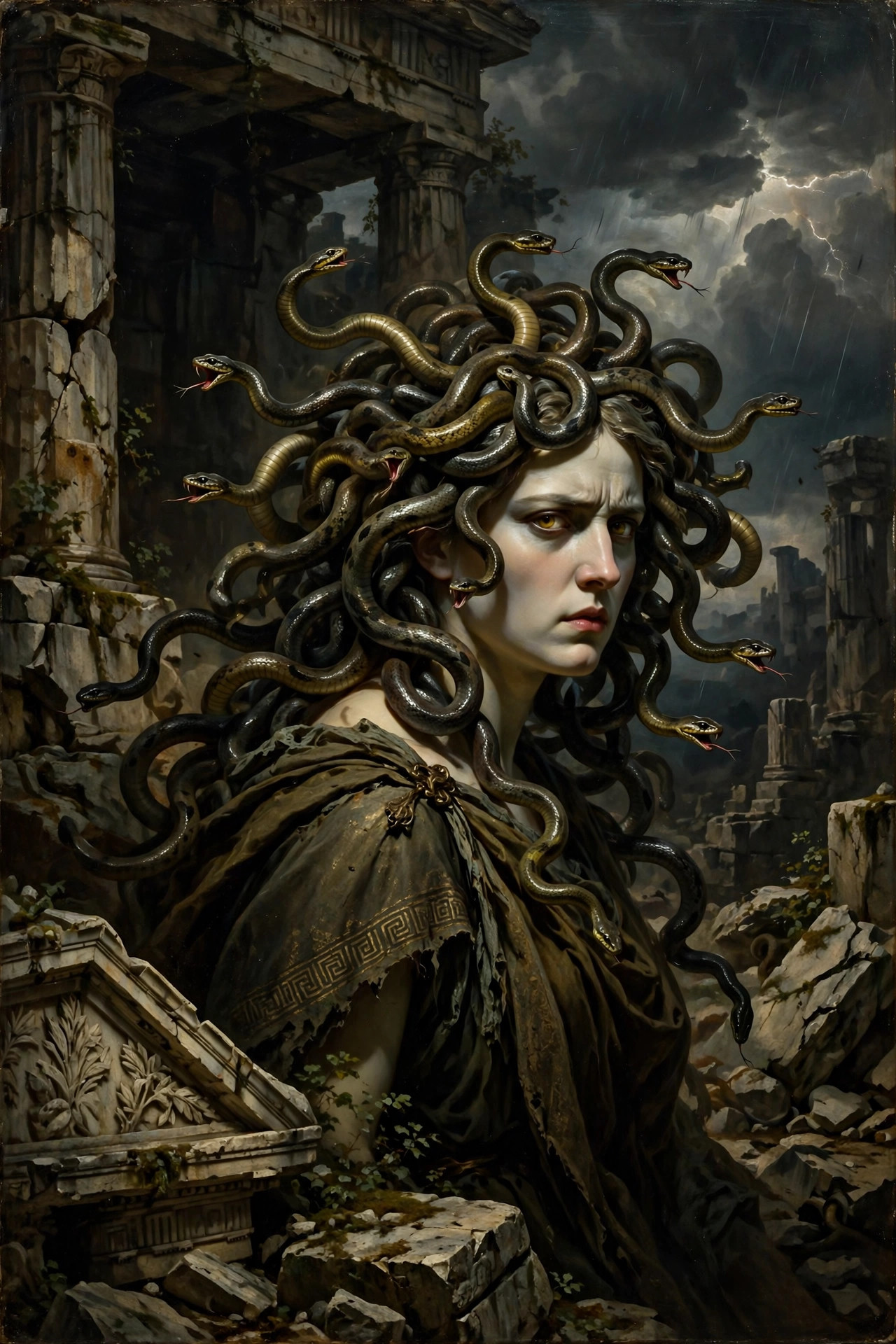
The Greeks believed that after the age of gods came an age of heroes, when divine blood still ran in human veins. Heracles (the Roman Hercules) performed twelve impossible labours, from strangling the Nemean lion to cleaning the Augean stables in a day. Perseus slew Medusa. Theseus threaded the Labyrinth and killed the Minotaur. Jason sailed with the Argonauts to steal the Golden Fleece. And Achilles, Odysseus and Hector fought out the ten-year Trojan War — the saga told in Homer's Iliad and Odyssey, the oldest surviving epics of Europe.
Stories With a Warning
Not all Greek myths are adventures. Many are cautionary tales about hubris — mortal pride reaching too far. Icarus flew too close to the sun on wings of wax. Narcissus wasted away staring at his own reflection. King Midas got the golden touch he wished for and nearly starved amid his treasure. Pandora, given a sealed jar she was told never to open, opened it and released every evil into the world, leaving only Hope trapped inside. The Greeks used these stories the way we use headlines: to argue about how people should live.
Why Greek Mythology Still Matters
Greek mythology gave us the words theatre, music, echo and narcissism, the names of most constellations and planets, and story patterns — the hero's journey, the tragic flaw, the descent to the underworld — that writers still follow today. But its real staying power is simpler. These gods and heroes are gloriously, recognisably human: jealous, generous, foolish and brave. We have never stopped telling their stories because, under the thunderbolts and monsters, they are about us.