Are Ghosts Real? The Evidence, the History and the Hauntings That Refuse to Die
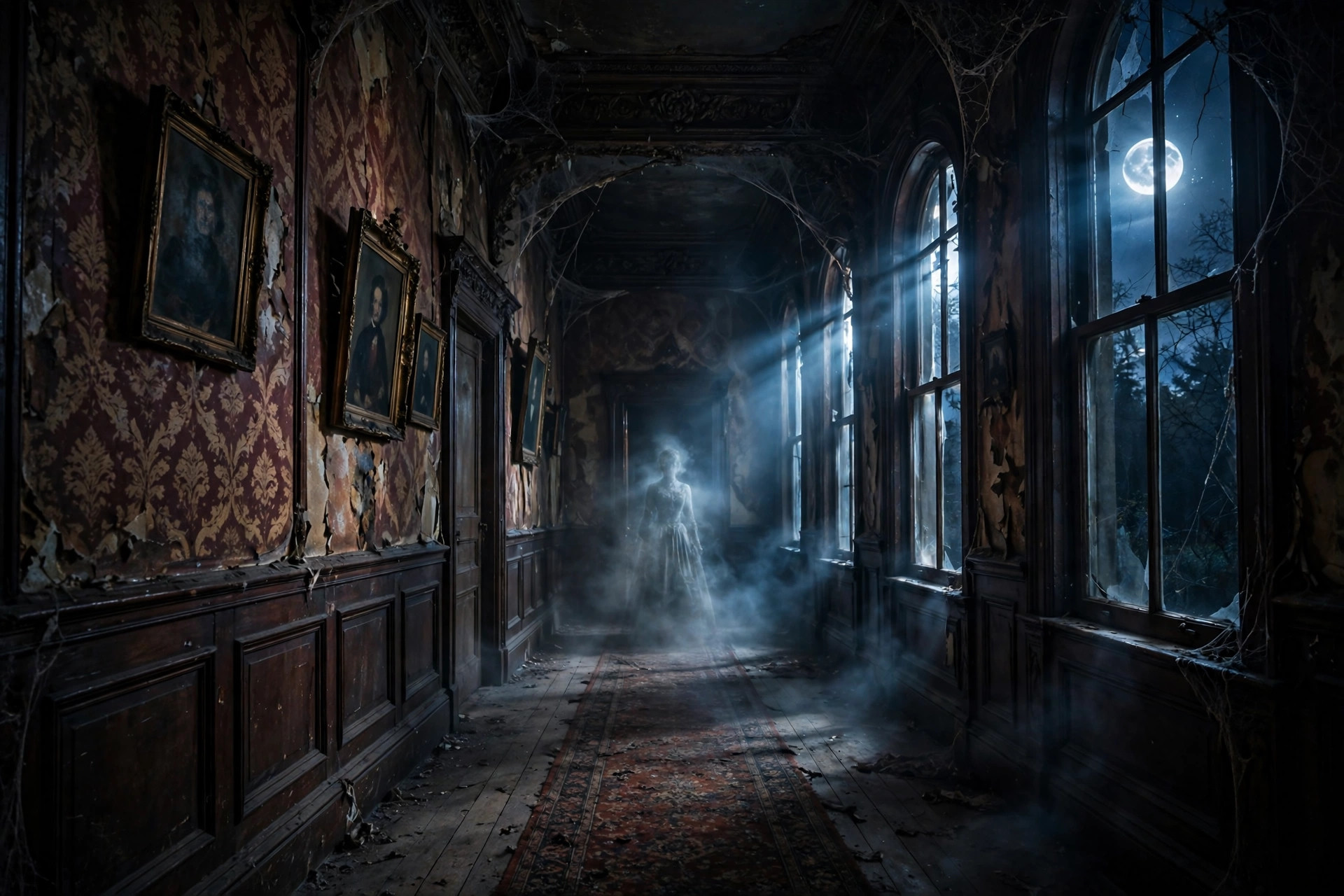
Are ghosts real? It may be the oldest unanswered question in folklore. The ancient Egyptians wrote letters to the dead. The Romans feared the lemures, spirits of the restless dead who had to be driven from the house with ritual and noise. In every age since, across every culture on Earth, people have reported the same experience: the dead, somehow, not entirely gone.
Belief in Ghosts Through History
Polls consistently show that somewhere between a third and a half of adults in Britain and America say they believe in ghosts, and a striking number claim to have seen one. This is not a modern fad. Pliny the Younger, writing in the first century AD, recorded a haunted house in Athens where a chain-rattling phantom led a philosopher to a buried, shackled skeleton — remove the bones, give them proper burial, and the haunting stopped. It is a template ghost stories have followed for two thousand years.
The Most Famous Hauntings on Record
Some cases refuse to fade. Borley Rectory in Essex was dubbed the most haunted house in England after decades of reports — a phantom nun, a ghostly coach, writing appearing on walls — investigated by the famous ghost hunter Harry Price in the 1930s. The Enfield poltergeist case of 1977, in a ordinary London council house, was witnessed by police officers, journalists and investigators, and remains argued about to this day. And the Waverly Hills Sanatorium in Kentucky, where thousands died of tuberculosis, draws investigators from around the world to its echoing wards.
What Science Says
Science has never produced a verified ghost, but it has produced some fascinating explanations for hauntings. Infrasound — sound below the range of hearing, produced by fans, wind and traffic — has been shown in experiments to cause feelings of dread, chills and even fleeting visual distortions, because the eyeball itself can resonate at those frequencies. Carbon monoxide leaks have explained more than one haunted house: the classic case, published in a medical journal in 1921, involved a family tormented by apparitions and footsteps until a faulty furnace was found poisoning them all. Add sleep paralysis — which produces a sensed, sinister presence in the bedroom with uncanny reliability — plus grief, expectation and the brain's habit of finding faces in shadows, and most hauntings have a natural candidate cause.
So, Are Ghosts Real?
The honest answer is that no ghost has ever survived controlled scientific scrutiny, yet no generation has stopped reporting them, and some witnesses — police officers, sceptics, scientists among them — remain convinced by what they experienced. Perhaps that is why the question endures. Ghosts sit exactly where folklore is strongest: at the border between what we can prove and what we cannot forget.
Whether you are a believer or a sceptic, the hauntings in our archive — from the spirits of the St. Augustine Lighthouse to the Waverly Hills Sanatorium — are best read the old way: at night, with the lights low.